Google AI Video Generator: Veo 3.1 Explained and How to Use It on Your Phone
Veo 3.1 is the model behind Google's AI video. Here is what it can do, how it differs from Gemini, and how to run Veo 3.1 Fast from your phone.

Written by Vincent Park
Published
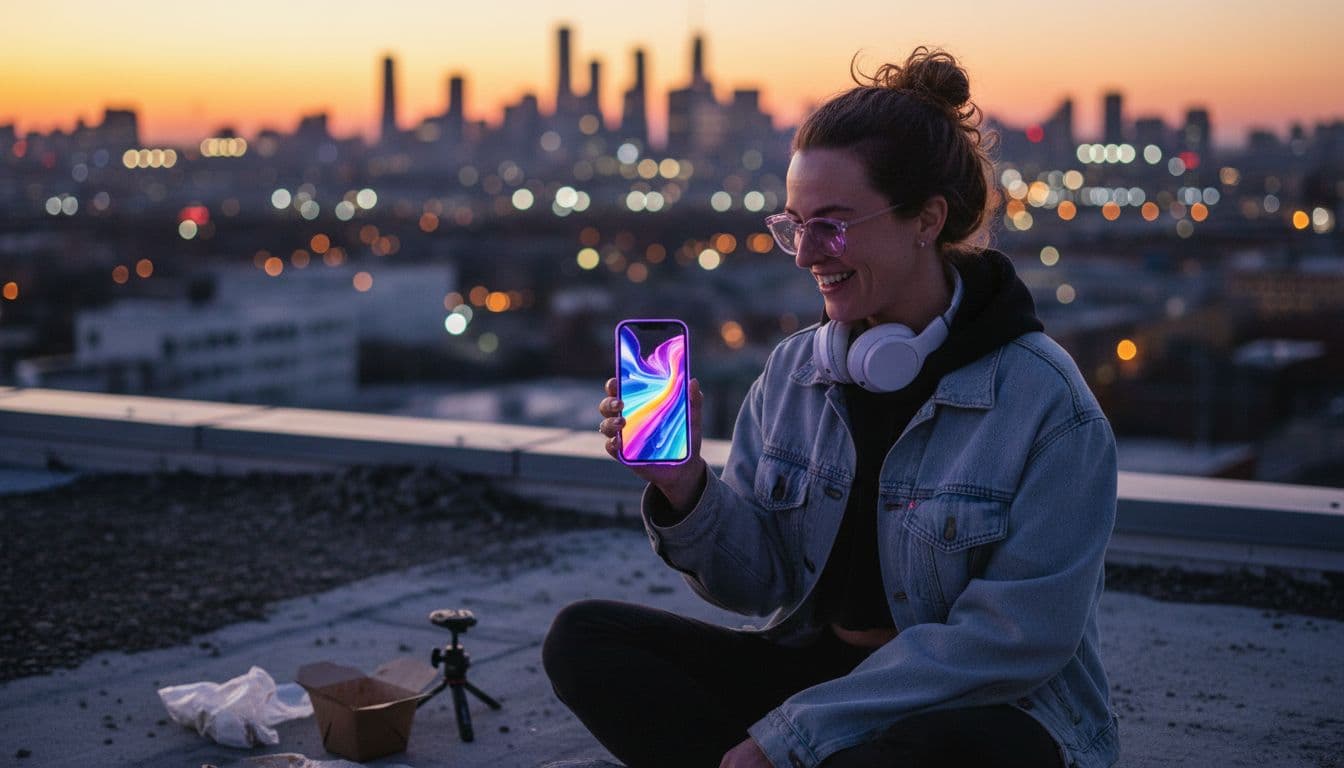
The Google AI video generator is Veo 3.1, Google DeepMind's text-to-video model, which turns a written prompt into a clip of up to 8 seconds with dialogue, sound effects and ambient audio generated in the same pass as the picture. You can run its faster tier, Veo 3.1 Fast, on your phone inside VIBE, and this guide explains what the model can do, how it relates to Gemini, and which prompts get the best results.
In one sentence
The Google AI video generator is Veo, Google DeepMind's family of video models, currently Veo 3.1, which creates short high-definition clips with native synchronized audio from a text prompt; its faster tier, Veo 3.1 Fast, is available in VIBE.
What is the Google AI video generator?
Google does not sell one product literally called “the Google AI video generator”. What people search for under that name is Veo, the video model built by Google DeepMind. Veo was first shown in May 2024, Veo 2 followed in December 2024, and Veo 3 arrived in May 2025 as the first version to generate synchronized audio, including dialogue, sound effects and ambient noise. Veo 3.1 followed in October 2025, and as of October 2026 Google's own Veo page still describes it as its leading video generation model.
Veo 3.1 comes in more than one tier. The standard model is the full-quality option, while Veo 3.1 Fast is the lower-latency tier designed for quicker turnaround. VIBE offers Veo 3.1 Fast, so you can use Google's video model from an iPhone, an Android phone or a browser without a developer account, a command line or a desktop workflow.

Is Veo the same as Gemini?
No. Gemini is Google's family of general-purpose AI models and assistants, while Veo is the dedicated video model. Google makes Veo reachable through its Gemini products and through the Gemini API, which is why searches for a “Gemini AI video generator” and a “Google Veo AI video generator” end up in the same place.
The lineup is moving. In 2026 Google introduced Gemini Omni Flash, a newer multimodal model for creating and editing video, and its developer documentation now recommends Omni Flash for general use while keeping Veo 3.1 for scene extension, last-frame control and existing pipelines. Veo 3.1 remains the Google video model available in VIBE as of October 2026, and it is the one this guide covers.
What can Veo 3.1 do? Specs at a glance
As of October 2026, Google's Gemini API documentation lists the capabilities below for Veo 3.1. The right-hand column shows what Veo 3.1 Fast offers inside the VIBE app, which is a narrower slice of the full API.
| Feature | Veo 3.1 (Google API) | Veo 3.1 Fast in VIBE |
|---|---|---|
| Clip length | 4, 6 or 8 seconds | Up to 8 seconds |
| Resolution | 720p, 1080p or 4K (1080p and 4K are 8-second only) | 1080p |
| Audio | Native dialogue, effects and ambience | Yes, native audio |
| Image input | Start frame, up to three reference images, first and last frame | Text-to-video only |
| Extension | Adds 7 seconds per step, up to 20 times (720p) | Not available |
- Native audio is always on. Prompts can include spoken lines, sound effects and ambient cues, and the model mixes them with the picture automatically.
- 24 frames per second in 16:9 and 9:16. Vertical clips for TikTok, Instagram Reels and YouTube Shorts are supported alongside widescreen.
- Image-guided control through the API. Veo 3.1 can start from a photo, keep a person or product consistent with reference images, and interpolate between a first and a last frame. The in-app Veo 3.1 Fast in VIBE is text-to-video.
- SynthID watermarking. Google states that every Veo video carries a SynthID watermark that can be checked with its verification platform.
How does Veo 3.1's built-in audio work?
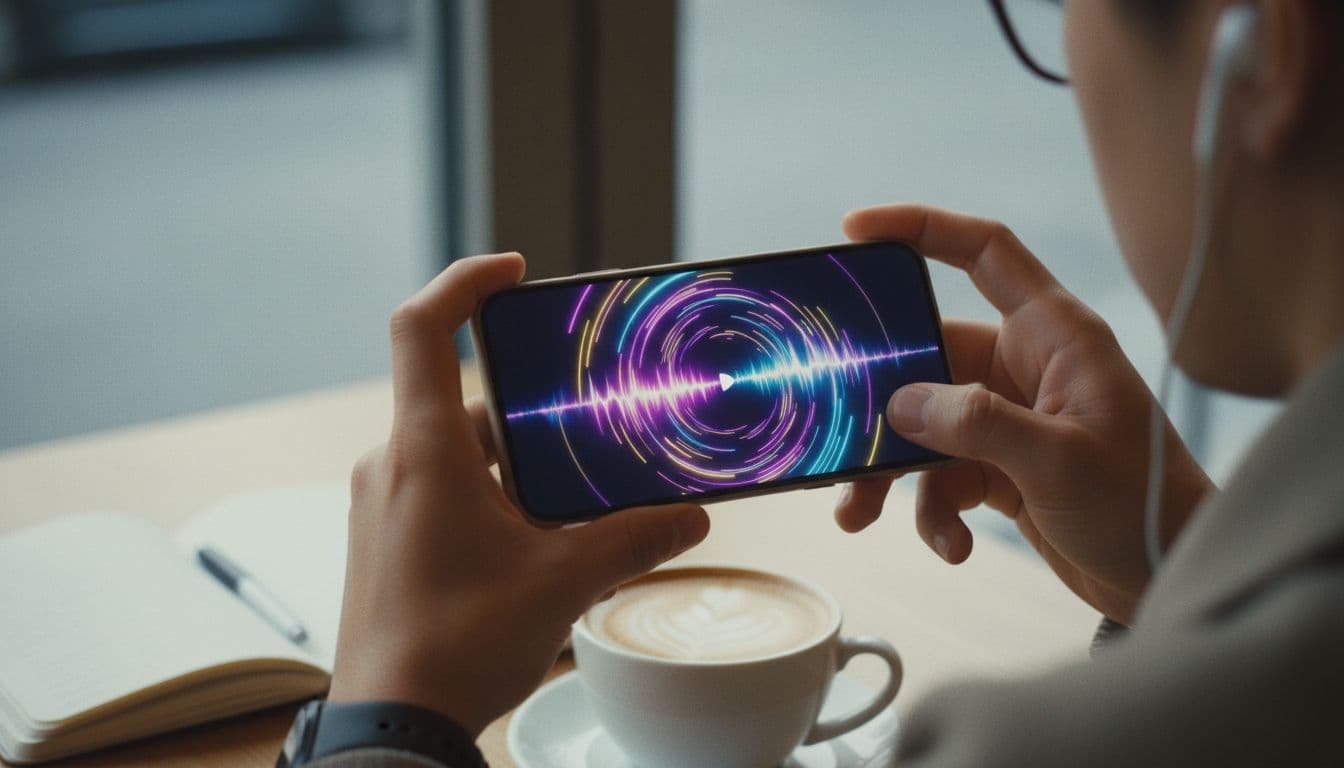
Veo 3.1 generates sound in the same pass as the picture, so a clip of a rainy street arrives with rain, footsteps and distant traffic already mixed. Because audio is always on, the way you write the prompt decides what you hear: put spoken lines in quotation marks and say who speaks, describe effects as sounds (“a metal door slams”), and give ambience its own phrase. Our guide to AI video with audio covers the structure in more depth.
 Veo 3.1 Fast
“Medium close-up of a street-food vendor at a night market, steam rising behind him. He looks into the camera and says, “Best noodles in the city, still hot.” Handheld camera, neon reflections, sizzling wok and crowd chatter in the background.”
Keep spoken lines short. An 8-second clip comfortably holds a single sentence of dialogue, so split longer scripts across several clips and edit them together afterwards.
How do you use the Google AI video generator on your phone?
Veo 3.1 Fast runs in VIBE on iOS, Android and the web, so there is nothing to install on a computer and no Google developer account to set up. The workflow takes a few minutes:
- Open VIBE and select Veo 3.1 Fast from the model list.
- Write a prompt that names the subject, the action, the camera move and the sound.
- Generate the clip and preview it with the audio on.
- Refine one detail at a time, such as the camera, the lighting or the spoken line, and generate again.
- Export the result and post it to TikTok, Instagram Reels or YouTube Shorts.
Veo 3.1 Fast is a Premium model in VIBE, while the free tier covers Seedance Pro Fast, LTX Video, Luma Dream Machine, Wan 2.6 and PixVerse. A practical habit is to rehearse a prompt on a free model, then run the final version on Veo for the audio. The Veo 3.1 Fast model page lists the current specs, and the full model lineup shows what else is available.
What are good Veo 3.1 prompts to copy?
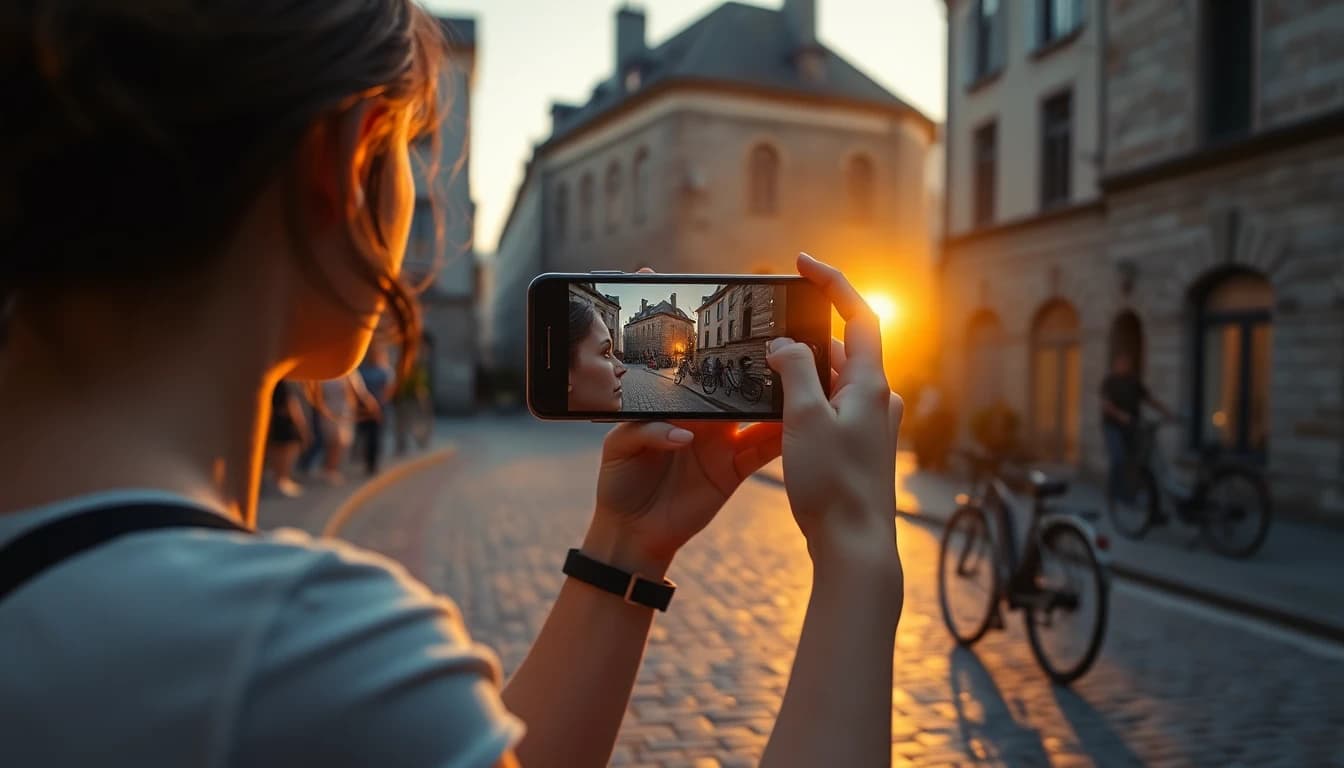
Veo responds best to prompts written like a shot list: subject, action, setting, camera, light and sound, in that order. Two more formats you can paste straight into VIBE:
Veo 3.1 Fast“Close-up of a ceramic coffee mug on a wooden table at sunrise, steam curling upward, slow push-in, warm window light, a soft ceramic clink as a hand sets the mug down, birdsong outside the window.”
Veo 3.1 Fast“9:16 vertical shot of a cyclist crossing a stone bridge over a canal at golden hour, tracking from behind at handheld height, church bells ringing in the distance, tyres humming on cobblestones, a gentle breeze.”
- One subject, one action. A single clear beat tends to look cleaner than a crowded scene in 8 seconds.
- Name the camera move. Push-in, tracking shot, handheld, overhead and static all read clearly.
- Give sound its own clause. Writing the audio as a separate phrase keeps it from being lost among visual details.
- Change one variable per re-run. If a take is close, alter only the lighting or only the line, not everything at once.
For more structure, see our guide to writing AI video prompts, which breaks the same shot-list idea down for every model in VIBE.
When should you pick Veo 3.1 Fast over other models in VIBE?
Pick Veo 3.1 Fast when the sound is part of the shot: speech, foley or atmosphere. Pick another model when length or input type matters. In VIBE, Kling 3 reaches 15 seconds and Sora 2 Pro reaches 12, and several models can start from a photo, which Veo 3.1 Fast in VIBE cannot. Our Kling 3 vs Veo 3.1 comparison puts the two premium models side by side, and the best AI video models of 2026 ranks the whole lineup.

What are the limits of the Google AI video generator?
- Short clips. Eight seconds is the ceiling for full-quality Veo 3.1 output, so longer stories need several clips edited together.
- Text-only in the app. Veo 3.1 Fast in VIBE starts from a prompt; for photo-to-video, choose a model that supports an uploaded image.
- Premium access. Veo 3.1 Fast is a premium model in VIBE rather than part of the free tier.
- Variable wait times. Google's documentation puts generation time between about 11 seconds and 6 minutes, depending on demand.
That is the picture as of October 2026, but Google's lineup is changing quickly, so check the model page before you plan a project around a single feature.
Frequently asked questions
What is the Google AI video generator?
It is Veo, Google DeepMind's family of text-to-video models. The current version, Veo 3.1, creates short high-definition clips with native audio from a written prompt, and its faster tier, Veo 3.1 Fast, is available in VIBE.
Is Veo the same as Gemini?
No. Gemini is Google's family of general AI models, while Veo is the dedicated video model. Google offers Veo through its Gemini products and the Gemini API, which is why people search for both names.
How long can a Veo 3.1 video be?
Google's API accepts 4, 6 or 8 seconds per clip, and 1080p and 4K output is limited to 8 seconds. In VIBE, Veo 3.1 Fast creates clips of up to 8 seconds.
Does Veo 3.1 generate audio?
Yes. Veo 3.1 always generates native audio, including dialogue, sound effects and ambient noise, in the same pass as the video.
Can I use Google's AI video generator on my phone?
Yes. Veo 3.1 Fast runs in VIBE on iOS, Android and the web, with no Google developer account needed.
Is Veo 3.1 free to use?
Veo 3.1 Fast is a premium model in VIBE. VIBE itself is free to start with no login, and its free tier includes Seedance Pro Fast, LTX Video, Luma Dream Machine, Wan 2.6 and PixVerse.
Can Veo 3.1 make vertical videos for TikTok and Reels?
Yes. Veo 3.1 supports 9:16 as well as 16:9, so the same prompt can produce a vertical clip for TikTok, Instagram Reels or YouTube Shorts.
Start Creating AI Videos Today
Download VIBE for free on iOS and Android. No login required. Access 10+ AI video models and generate videos from text prompts or images.


Keep reading
All articles Model news
Happy Horse 1.1: What Alibaba's AI Video Model Does and How It Compares
Happy Horse 1.1 is Alibaba's video model with audio generated in one pass. Here are the specs, what changed from 1.0, and which VIBE models come closest.
Vincent Park9 min read Model news
Sora 2 AI Video Generator: What Happened and What to Use Now
OpenAI has closed Sora. Here is the timeline, what made Sora 2 special, and the models you can use in VIBE to get the same realistic look.
Vincent Park9 min read